Special containers are purpose‑built units designed to meet demands that go beyond the capabilities of standard freight or storage containers. They serve in sectors such as energy, telecommunications, healthcare, emergency response, scientific research, and extreme environment operations. Because they must perform reliably under conditions ranging from high pressure and temperature to corrosive atmospheres, cryogenic environments, or intense mechanical stress, the choice of materials and manufacturing processes is critical. These decisions determine not only the structural integrity and longevity of the container but also its functional suitability, safety, and compliance with regulatory standards.
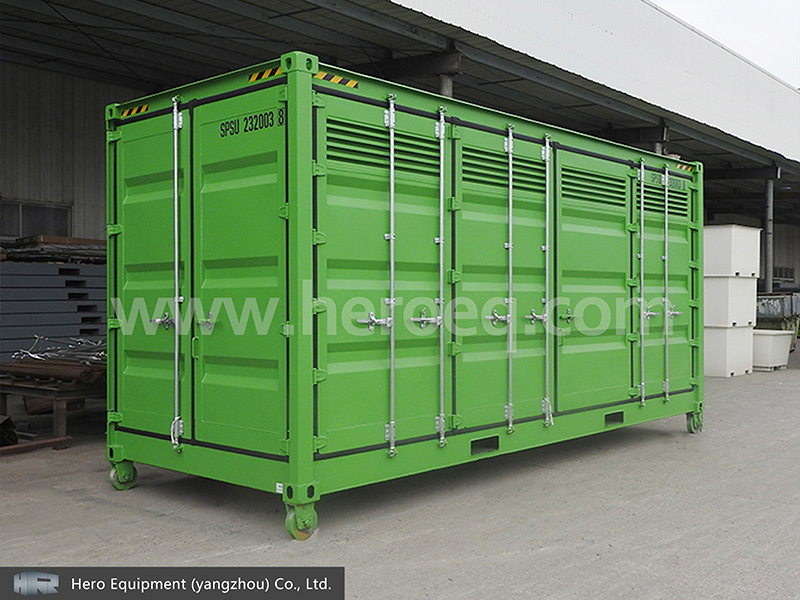
Material Selection Principles for Special Containers
The primary considerations when selecting materials for special containers include mechanical strength, corrosion resistance, thermal properties, weight, cost, and compatibility with the intended contents or operating environment. Unlike general cargo containers, which prioritize low cost and ease of repair, special containers often require advanced alloys, composites, or specialized polymers to withstand unique stresses and exposures.
Metals remain a dominant category due to their high strength, durability, and predictable performance. Stainless steels are favored where corrosion resistance is paramount, especially against moisture, chemicals, or saline environments. Their chromium content forms a passive oxide layer that protects against oxidation and many aggressive substances. For applications involving elevated temperatures, nickel‑based alloys may be chosen because of their stability at high heat and resistance to creep deformation. Aluminum alloys provide an excellent strength‑to‑weight ratio, making them suitable for transportable or airborne containers where mass is a constraint, while still offering reasonable corrosion protection, especially when treated with anodizing or protective coatings.
Carbon steel is sometimes used for heavy‑duty containers requiring very high load capacity, provided it is protected by robust surface treatments such as hot‑dip galvanizing, powder coating, or specialized paint systems to prevent rust. In cryogenic applications, certain stainless steels and aluminum alloys retain toughness and ductility even at extremely low temperatures, avoiding brittle fracture.
Composites, particularly fiber‑reinforced polymers, are increasingly employed where lightweight and high strength are essential, and where metallic solutions would be too heavy or prone to galvanic corrosion in mixed‑material assemblies. Glass fiber, carbon fiber, and aramid fiber composites can be tailored for specific stiffness, impact resistance, and environmental resistance. Some special containers for electromagnetic shielding use metal matrix composites or conductive polymer blends.
In addition to structural materials, sealing and lining materials play vital roles. Elastomers such as EPDM, Viton, or silicone rubber are selected for gaskets and seals based on chemical compatibility, temperature range, and compression set characteristics. Linings made from specialty polymers or metals protect the container interior from contamination or reaction with the stored material. Insulation materials—ranging from mineral wool and polyurethane foam to vacuum‑insulated panels—are integrated into containers requiring thermal control.
Forming and Shaping Processes
Manufacturing begins with shaping the chosen materials into the required geometries. Metals are commonly processed by cutting, forming, machining, and joining. Cutting techniques include laser cutting, waterjet cutting, and plasma cutting, chosen according to material type and precision needs. Forming processes such as rolling, pressing, deep drawing, and stamping transform flat stock into curved panels, cylindrical shells, or complex three‑dimensional parts. For large or thick sections, flame or plasma cutting followed by machining refines dimensions and features.
Aluminum and some alloys may undergo extrusion to produce uniform profiles used in frames and stiffeners. Sheet metal fabrication allows production of panels with integrated flanges, holes, and reinforcements that simplify assembly. Precision machining ensures critical dimensions for fittings, ports, valves, and mounting interfaces.
Composite manufacturing relies on processes suited to the type of reinforcement and matrix. Hand lay‑up and spray‑up methods allow manual placement of fibers and resin for low‑volume or large‑scale parts. Vacuum infusion and resin transfer molding improve fiber volume fraction and part consistency for medium‑to‑high volumes. Filament winding is ideal for cylindrical pressure vessels, producing strong, lightweight structures with continuous fiber alignment along stress paths. Compression molding and autoclave curing enable high‑performance components with excellent surface finish and mechanical properties, albeit with higher equipment investment.
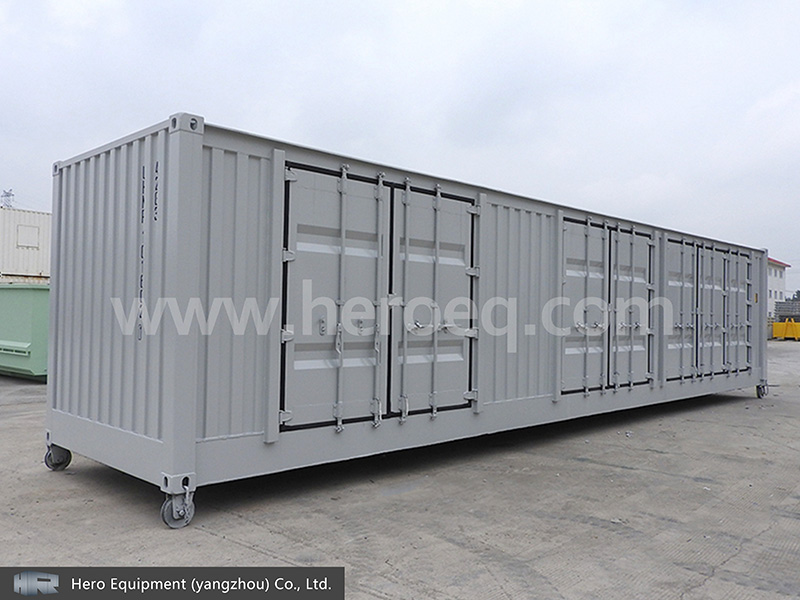
Joining Techniques
Joining is a pivotal step, as the reliability of seams and connections often determines overall container integrity. Welding is prevalent for metallic containers; common methods include shielded metal arc welding, gas metal arc welding, and tungsten inert gas welding. Selection depends on material type, thickness, and required joint quality. Pressure‑tight and leak‑free welds are essential for containers holding gases or liquids under pressure or vacuum. Post‑weld treatments such as stress relieving, pickling, passivation, or coating ensure corrosion resistance is restored or enhanced.
Brazing and soldering join metals with filler metals having lower melting points, useful for intricate joints or dissimilar materials. Mechanical fastening with bolts, rivets, or screws offers disassembly advantages and is used where welding is impractical—for instance, when joining composite to metal or when frequent maintenance access is needed. Adhesive bonding serves both metallic and composite assemblies, distributing loads smoothly and sealing gaps, often combined with mechanical fasteners for redundancy.
For composite shells, joining typically involves bonding with structural adhesives formulated for the specific resin system, sometimes reinforced with mechanical fasteners. Co‑curing during molding can integrate multiple components without secondary bonding steps.
Surface Treatment and Protection
Surface treatment is indispensable for extending service life and ensuring safety. Cleaning removes oils, oxides, and contaminants before further processing. Protective coatings include electroplating (e.g., zinc or nickel), hot‑dip galvanizing for steel, and anodizing for aluminum, enhancing corrosion and wear resistance. Paints and powder coatings provide color, additional barrier protection, and resistance to UV radiation and chemicals. Specialty coatings may offer non‑stick properties, anti‑microbial action, or radar‑absorbing characteristics depending on application.
Lining processes deposit or bond internal layers of corrosion‑resistant or chemically compatible materials. Sprayed metal linings, sheet lining, or molded polymer inserts create barriers between the container shell and its contents, preventing contamination or hazardous reactions.
Integration of Functional Systems
Many special containers incorporate built‑in systems that influence material choices and manufacturing sequences. Thermal insulation may require sandwich panel construction using inner and outer skins with core material bonded or laminated between them. Electrical conductivity for grounding or electromagnetic shielding can be achieved by using conductive paints, metallized surfaces, or embedded foil layers. Ports, valves, sensors, and instrumentation must be installed with compatible materials and sealed to maintain container performance. In some cases, modular designs allow prefabrication of subassemblies—such as frame modules, panel sections, or system pods—that are later joined into the final unit, streamlining production and enabling customization.
Quality Assurance and Testing
Throughout manufacturing, rigorous quality checks verify material properties, dimensional accuracy, joint integrity, and system functionality. Non‑destructive testing methods such as ultrasonic testing, radiographic inspection, and dye penetrant inspection detect flaws invisible to the naked eye. Pressure testing, helium leak detection, and thermal cycling validate performance under simulated operating extremes. Documentation of material certifications, process parameters, and test results supports traceability and compliance with industry standards.
Sustainability Considerations
Increasingly, material and process selection also considers environmental impact. Manufacturers may choose recyclable materials, minimize waste through precision cutting and nesting, and employ low‑emission coating technologies. Life‑cycle thinking encourages designs that facilitate refurbishment, reuse, or recycling at end of service, reducing the ecological footprint of special containers.
The materials and manufacturing processes used for special containers are chosen to match the specific demands of their operational contexts. High‑strength metals, corrosion‑resistant alloys, lightweight composites, and specialized polymers form the basis of structures that protect against mechanical, thermal, chemical, and electromagnetic challenges. Forming, joining, and finishing techniques are applied with precision to ensure airtightness, structural robustness, and durability. Surface treatments and integrated systems extend performance ranges, while quality assurance guarantees reliability. As technology advances, the synergy between innovative materials and refined processes will continue to expand the possibilities for special containers, enabling safer, more efficient, and more adaptable solutions across demanding fields.



 Telefono
Commento
(0)